
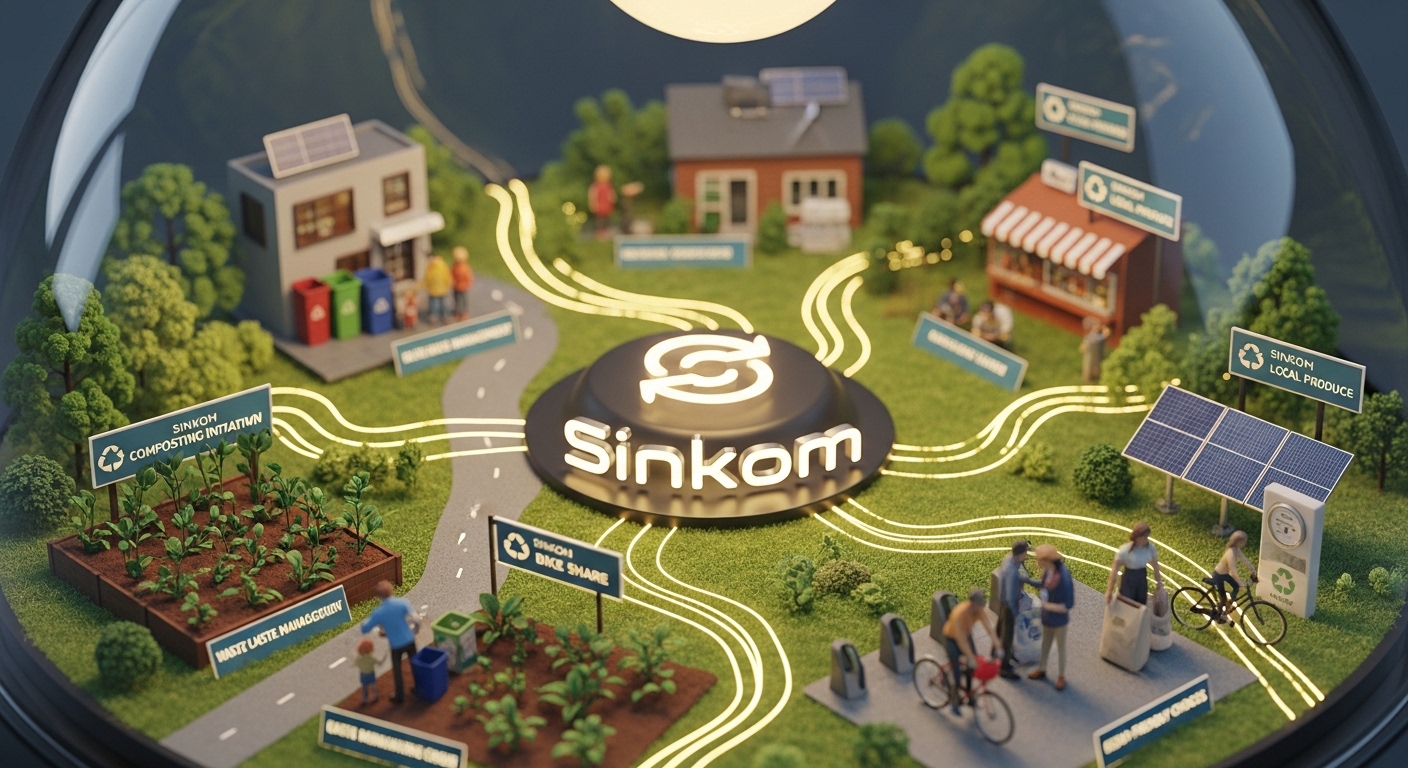
A young founder, frustrated by the overwhelming waste generated in daily routines, began rethinking how everyday systems could work smarter—not harder—for both people and the planet. What began as a small initiative soon evolved into a broader concept now recognized as Sinkom—a growing movement that blends smart innovation with sustainability in practical, everyday ways.
In a world where climate concerns are no longer distant headlines but present realities, Sinkom represents a shift in mindset. It is not about grand, unreachable solutions. Instead, it focuses on realistic, scalable changes that integrate seamlessly into daily life. From how we consume energy to how we manage waste, Sinkom is quietly reshaping modern living.
Understanding Sinkom in a Real-World Context
At its core, Sinkom is a concept that merges sustainability with intelligent systems and conscious decision-making. Rather than relying solely on large-scale industrial reforms, it emphasizes small, interconnected actions that collectively create meaningful environmental impact.
In practical terms, Sinkom can be seen in the way households adopt energy-efficient appliances, businesses redesign packaging to reduce waste, and digital platforms optimize resource usage. It is not a single technology or product—it is an ecosystem of smarter practices guided by sustainability principles.
What makes Sinkom particularly relevant today is its accessibility. Unlike complex environmental frameworks that require policy-level changes, thrives on individual and organizational participation. It empowers people to act without waiting for systemic shifts.
The Rise of Sinkom in Modern Lifestyles
The growing popularity of Sinkom is closely tied to changing consumer behavior. People are becoming more aware of their environmental footprint, and they are actively seeking solutions that align with their values without disrupting their routines.
Urban living, in particular, has accelerated the adoption of Sinkom-inspired practices. Smart homes, for example, are increasingly designed to minimize energy waste through automated lighting, temperature control, and water management systems. These innovations reflect the essence of —efficiency combined with sustainability.
At the same time, digital transformation has made it easier to track and manage consumption patterns. Apps and platforms now provide insights into energy use, waste generation, and even carbon footprints. This level of awareness encourages more informed decisions, reinforcing the approach.
Sinkom and Sustainable Consumption Patterns
One of the most significant contributions of Sinkom lies in how it influences consumption habits. Traditional consumption models often prioritize convenience and cost over environmental impact. challenges this by introducing a more balanced perspective.
Consumers are now more inclined to choose products that are durable, recyclable, and ethically produced. This shift is not driven by obligation but by awareness. Sinkom fosters a mindset where sustainability becomes a natural part of decision-making rather than an afterthought.
Businesses, in response, are adapting their strategies. They are investing in sustainable materials, reducing packaging waste, and adopting circular economy principles. Sinkom acts as a bridge between consumer expectations and business innovation, creating a cycle of continuous improvement.
How Sinkom Integrates Technology with Sustainability
Technology plays a crucial role in the evolution of Sinkom. Without innovation, many sustainable practices would remain inefficient or impractical. Sinkom leverages technology to make sustainability not only achievable but also convenient.
Smart sensors, data analytics, and automation are some of the key tools driving this transformation. For instance, energy management systems can automatically adjust power usage based on real-time demand, reducing unnecessary consumption. Similarly, waste management solutions can optimize collection routes and recycling processes.
The integration of technology ensures that sustainability does not come at the cost of efficiency. Instead, it enhances it. This synergy is what sets apart from traditional environmental approaches, making it more appealing to modern users.
Practical Applications of Sinkom in Everyday Life
To understand the real impact of Sinkom, it is helpful to look at its practical applications. These examples highlight how the concept translates into everyday actions.
| Area of Life | Traditional Approach | Sinkom Approach |
|---|---|---|
| Energy Usage | Fixed consumption patterns | Smart, adaptive energy management |
| Waste Management | Linear disposal systems | Recycling and circular systems |
| Transportation | Fuel-dependent commuting | Shared mobility and efficient routing |
| Shopping Habits | Convenience-driven purchases | Conscious and sustainable choices |
| Home Management | Manual control of resources | Automated, optimized systems |
This table illustrates how Sinkom transforms routine activities into opportunities for sustainability. The changes may seem small individually, but their collective impact is substantial.
The Role of Entrepreneurs and Innovators in Sinkom
Entrepreneurs and innovators are at the forefront of the Sinkom movement. They are the ones translating abstract sustainability goals into tangible solutions that people can adopt easily.
Startups are particularly influential in this space. Their agility allows them to experiment with new ideas and respond quickly to emerging challenges. Whether it is developing eco-friendly products or creating platforms that promote resource sharing, these innovators are driving the evolution of Sinkm.
For founders, Sinkom is not just an opportunity—it is a responsibility. It encourages them to think beyond profit and consider the long-term impact of their ventures. This shift in perspective is redefining what it means to build a successful business in the modern world.
Challenges Facing the Growth of Sinkom
Despite its potential, Sinkom is not without challenges. One of the primary obstacles is awareness. While the concept is gaining traction, many people are still unfamiliar with its principles and benefits. Another challenge is accessibility. Not all sustainable technologies are affordable or widely available. This creates a gap between those who can adopt practices and those who cannot.
There is also the issue of resistance to change. привычات and routines are deeply ingrained, and shifting them requires both motivation and support. Sinkom addresses this by focusing on gradual, manageable changes rather than drastic transformations. Overcoming these challenges will require collaboration between individuals, businesses, and policymakers. Only through collective effort can reach its full potential.
The Future of Sinkom in a Changing World
Looking ahead, the future of Sinkom appears promising. As environmental concerns continue to grow, the demand for practical and effective solutions will only increase. Sinkm is well-positioned to meet this demand.
Advancements in technology will further enhance its capabilities, making sustainable practices more efficient and accessible. At the same time, increasing awareness will encourage more people to adopt Sinkom principles in their daily lives. The concept is also likely to expand beyond individual actions to influence larger systems. Cities, industries, and governments may integrate -inspired strategies into their operations, creating a more sustainable and resilient future.
Why Sinkom Matters More Than Ever
The significance of Sinkom lies in its practicality. It does not rely on idealistic visions or distant goals. Instead, it focuses on what can be done here and now, using the resources and technologies available. In a time when environmental challenges can feel overwhelming, Sinkom offers a sense of agency. It shows that meaningful change is possible without drastic sacrifices. By making sustainability a part of everyday life, it bridges the gap between intention and action.
For entrepreneurs, tech readers, and founders, represents an opportunity to lead by example. It encourages innovation that is not only profitable but also responsible. This dual focus is essential for building a future that is both sustainable and prosperous.
Conclusion
Sinkom is more than a trend—it is a shift in how we approach daily life. It redefines sustainability as something that is not separate from our routines but integrated within them. By combining technology, awareness, and practical action, it creates a framework for lasting change.
As more people embrace this approach, the cumulative impact will become increasingly visible. Cleaner environments, more efficient systems, and more conscious communities are just some of the outcomes we can expect. The journey toward sustainability does not have to be complicated. With it begins with small, intentional choices that, over time, lead to significant transformation.