
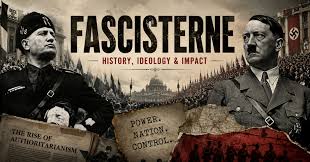
Fascisterne is a term that is often linked with authoritarian political ideology and systems of governance that emphasize centralized power, strict control, and strong national identity. While the term itself is less commonly used in mainstream political vocabulary, it is generally associated with fascist-style thinking or structures that prioritize state authority over individual freedom.
Understanding Fascisterne requires exploring the broader political and historical context in which such ideologies developed. It is connected to systems where leadership is highly centralized, opposition is limited, and national unity is promoted through strict control of society.
In modern discussions, Fascisterne is often analyzed in academic political science as a representation of extreme governance models that prioritize authority, discipline, and uniformity over democratic freedoms and pluralism.
Historical Background of Fascisterne
The roots of Fascisterne can be traced back to early 20th-century Europe, where political and economic instability created conditions for authoritarian movements to rise. During this period, several countries experienced social unrest, unemployment, and dissatisfaction with democratic governments.
In response, certain political leaders promoted ideologies that emphasized strong leadership, national revival, and centralized authority. These ideologies gradually developed into what is commonly known as fascism.
Fascisterne, in this broader sense, represents the evolution of such systems and their influence on governance models that reject liberal democracy in favor of controlled political structures. These systems often emerged in times of crisis when populations sought stability and order.
Core Principles of Fascisterne
Fascisterne is generally associated with several core principles that define its political and social structure. One of the most important principles is the concentration of power in a single authority or ruling party. This ensures that decision-making is centralized and controlled.
Another key principle is nationalism. Fascisterne systems often emphasize strong national identity and unity, encouraging citizens to prioritize the state above personal or group interests.
Control of society is also a central feature. Governments associated with Fascisterne ideologies often regulate media, education, and public expression to maintain ideological consistency.
Militarism is another important aspect. Strong defense forces and military values are often promoted as symbols of national strength and unity.
Finally, opposition to political diversity is a common characteristic. In such systems, political opposition is often restricted or eliminated to maintain stability and control.
Political Structure in Fascisterne Systems
The political structure associated with Fascisterne is highly centralized. Power is usually concentrated in a single leader or ruling party that holds ultimate authority over state affairs.
In such systems, democratic processes like free elections, political debate, and multiparty competition are either limited or absent. The government controls major institutions, including the judiciary, media, and law enforcement.
This structure allows for quick decision-making but reduces political freedom and public participation. Citizens have limited influence over governance, and political dissent is often discouraged.
The centralized nature of Fascisterne systems is designed to maintain order and unity, but it often raises concerns about human rights and individual freedoms.
Social and Cultural Influence of Fascisterne
Fascisterne not only affects political systems but also influences social and cultural life. In such environments, cultural expression is often guided by state-approved values and ideologies.
Education systems may be used to promote national identity and loyalty to the state. History, literature, and media are sometimes shaped to reflect government-approved narratives.
Public behavior is also influenced by social expectations that emphasize discipline, obedience, and unity. Citizens are often encouraged to prioritize collective goals over individual expression.
While this can create a sense of order and shared identity, it may also limit creativity, diversity, and freedom of expression within society.
Economic Characteristics of Fascisterne
The economic systems associated with Fascisterne vary, but they often involve significant state control or influence over industries and resources. Governments may regulate key sectors of the economy to ensure stability and national development.
In some cases, private businesses are allowed but operate under strict government oversight. In other cases, major industries may be fully controlled by the state.
The goal of such economic structures is to support national strength and reduce dependency on external forces. Economic policies are often aligned with political objectives rather than purely market-driven principles.
However, this level of control can sometimes limit innovation and economic competition, depending on how strictly the system is implemented.
Psychological and Ideological Aspects
Fascisterne also involves strong ideological influence on individuals and society. Governments or ruling parties often promote a unified belief system that emphasizes loyalty, obedience, and national pride.
Propaganda and media control are commonly used tools to shape public opinion and maintain support for the ruling authority. Citizens may be exposed to consistent messaging that reinforces the legitimacy of the system.
Psychologically, such environments can create a strong sense of belonging and identity, but they may also discourage independent thinking and criticism of authority.
The ideological structure is designed to maintain stability by ensuring that most citizens share similar beliefs and values.
Criticism and Controversies
Fascisterne has been widely criticized in political science and history due to its association with authoritarianism and limited freedoms. One of the main criticisms is the restriction of human rights and democratic participation.
In such systems, freedom of speech, press, and political opposition are often limited. This raises concerns about fairness, equality, and justice within society.
Another major criticism is the potential for abuse of power. When authority is concentrated in a single leader or party, there is a risk that power may be used without accountability.
Additionally, critics argue that such systems can suppress diversity and innovation by enforcing strict conformity.
Despite these criticisms, some supporters argue that centralized systems can provide stability and efficiency in times of crisis. However, this remains a highly debated topic in political theory.
Fascisterne in Modern Context
In today’s world, Fascisterne is mostly studied as a historical and theoretical concept rather than a widely practiced political system. However, certain elements of authoritarian governance can still be observed in different countries and political movements.
Modern political scientists use the concept to analyze power structures, governance styles, and the balance between authority and freedom. It is also used to understand how societies respond to crisis situations and political instability.
With the rise of digital media and global communication, discussions about authoritarian systems have become more relevant. Issues such as censorship, surveillance, and political control are often analyzed in relation to historical models like Fascisterne.
Conclusion
Fascisterne represents a complex political and ideological concept associated with centralized authority, strong nationalism, and controlled governance structures. While it emerged from specific historical conditions, its influence continues to be studied in modern political science.
Understanding Fascisterne is important for analyzing how power operates within societies and how different political systems impact freedom, stability, and development.
Although it offers certain advantages such as strong leadership and quick decision-making, it also raises serious concerns about individual rights, democracy, and freedom of expression.
In conclusion, Fascisterne remains a significant topic in political and historical studies, helping us better understand the balance between authority and liberty in human societies.