The culinary world is currently witnessing a fascinating transformation where ancient preservation techniques are being reimagined through the lens of modern science, and at the heart of this movement is a deep dive into Dougahozonn. This specialized approach to gastronomy represents more than just a method of preparing food; it is a philosophy that seeks to bridge the gap between historical wisdom and contemporary culinary technology. As chefs and food scientists look backward to move forward, the principles of Dougahozonn provide a sturdy framework for creating flavors that are both nostalgically familiar and strikingly original. This exploration requires an appreciation for the patience required in traditional aging processes while simultaneously embracing the precision offered by high-tech kitchen equipment. By examining how these two worlds collide, we gain a clearer understanding of why this specific gastronomic trend is capturing the imaginations of fine dining enthusiasts and home cooks alike.
Understanding the essence of Dougahozonn requires a journey into the cultural roots where fermentation and long-term storage were once matters of survival rather than stylistic choices. In the modern era, these methods have been elevated to an art form, allowing for the development of complex umami profiles that cannot be replicated by rapid cooking techniques alone. The practice involves a meticulous balance of temperature control, microbial management, and ingredient selection to ensure that the final product maintains its structural integrity while gaining depth. This deep dive into Dougahozonn reveals a dedication to the “slow food” ethos, where time is treated as a primary ingredient rather than a logistical hurdle. As we peel back the layers of this culinary phenomenon, it becomes evident that the marriage of tradition and innovation is not just a trend but a necessary evolution in the way we perceive and consume high-quality cuisine.
The Historical Foundations of Dougahozonn and Ancient Preservation
The historical significance of food preservation serves as the primary bedrock upon which the modern concept of Dougahozonn is built, reflecting centuries of human ingenuity in the face of seasonal scarcity. Long before the advent of refrigeration, various cultures developed sophisticated systems to keep proteins and vegetables viable through harsh winters or long sea voyages. These early iterations of what we now call Dougahozonn relied heavily on natural elements like salt, smoke, and buried earthenware to create anaerobic environments. These techniques were passed down through generations, often shrouded in secrecy and ritual, forming a cultural identity that modern chefs are now eager to reclaim. By studying these ancient blueprints, we can see that the goal was never just to stop decay, but to guide it in a way that transformed the original ingredient into something more valuable and nutrient-dense.
In the contemporary kitchen, the legacy of these ancient methods is honored through a renewed focus on the bio-chemical changes that occur during the Dougahozonn process. While the ancients may not have understood the specific roles of lactic acid bacteria or enzymatic breakdown, they possessed an intuitive mastery over the results. Modern practitioners are now utilizing this deep dive into Dougahozonn to document these changes with scientific rigor, ensuring that the tradition is not lost to history but rather reinforced by data. This transition from folklore to food science allows for a higher degree of safety and consistency, making traditional flavors more accessible to a global audience. The preservation of these techniques ensures that the soul of the dish remains intact, even as the tools used to create it become increasingly sophisticated and computerized.
Exploring the Scientific Mechanics of Dougahozonn in Modernity
To truly understand the internal workings of this culinary style, one must engage in a deep dive into Dougahozonn through the lens of microbiology and molecular gastronomy. The process is governed by the controlled decomposition of organic matter, where specific enzymes break down complex proteins into simple amino acids like glutamate. This chemical shift is what creates the savory sensation often associated with the most successful Dougahozonn experiments, providing a richness that defines the palate. Unlike standard cooking, which uses heat to denature proteins quickly, this method relies on the steady, slow work of beneficial microbes to reorganize the molecular structure of the food. By maintaining a precise environment, chefs can encourage the growth of “good” bacteria while inhibiting spoilage organisms, resulting in a product that is both safe and exceptionally flavorful.
The integration of technology into this field has allowed for a level of precision that was previously unimaginable for traditional practitioners of Dougahozonn. Digital sensors can now monitor the exact moisture content and gas exchange within a fermentation vessel, providing real-time feedback to the culinary team. This technological intervention does not replace the artisan’s touch but rather enhances it by removing the guesswork associated with environmental fluctuations. When performing a deep dive into Dougahozonn, it becomes clear that innovation is the guardian of tradition, preventing batches from being lost to mold or improper aging. This synergy allows for the experimentation with non-traditional ingredients, such as applying ancient koji-aging techniques to local heirloom vegetables or sustainably sourced seafood. The result is a vibrant, evolving culinary language that respects its ancestry while speaking fluently to the modern, tech-savvy gourmet.
Sensory Evolution and the Dougahozonn Tasting Experience
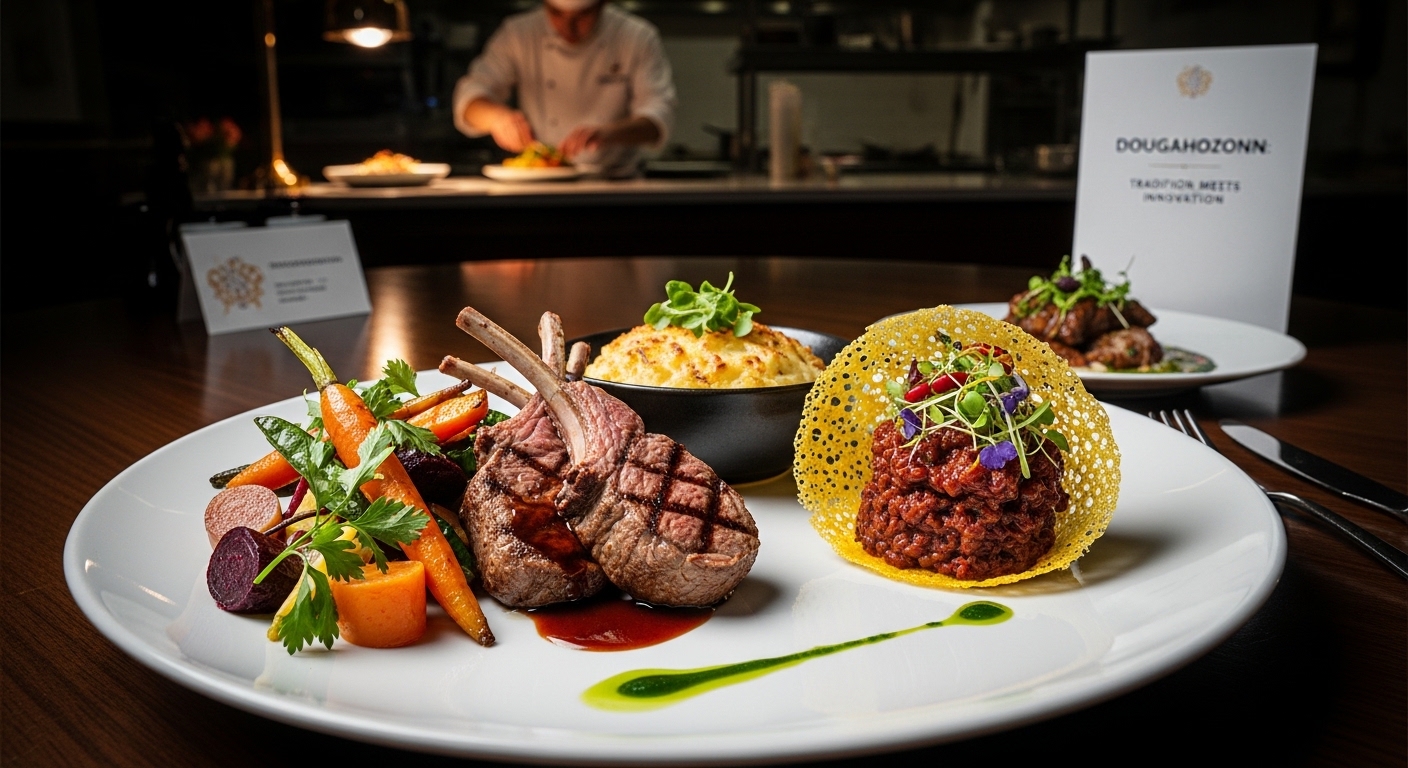
The sensory profile of a dish prepared using these methods is remarkably distinct, offering a complexity that a deep dive into Dougahozonn highlights as its greatest achievement. When an ingredient undergoes this transformation, its texture often shifts from the fibrous or resilient state of raw produce to a buttery, almost melt-in-the-mouth consistency. This textural evolution is accompanied by an aromatic profile that can range from earthy and fungal to brightly acidic and floral, depending on the specific microbes involved. For the diner, experiencing Dougahozonn is an exercise in mindfulness, as the tongue must navigate several layers of flavor that reveal themselves at different stages of the chew. It is this depth of flavor that defines the “tradition meets innovation” aspect of the practice, as the results feel both primal and incredibly sophisticated.
Beyond the immediate taste, the visual presentation of preserved foods has also undergone a radical shift in the modern era of Dougahozonn. Chefs are no longer hiding preserved components in sauces; instead, they are featuring them as the centerpiece of the plate, showcasing the beautiful discolorations and crystalline structures that form during aging. This transparency encourages the consumer to ask questions about the origin and journey of their food, fostering a deeper connection between the farm, the lab, and the table. A deep dive into Dougahozonn suggests that the future of fine dining lies in this transparency, where the story of the ingredient’s transformation is as important as the flavor itself. By elevating these aged products, gastronomy moves away from the “fresh is best” dogma and toward a more nuanced appreciation for the beauty of maturity and controlled decay.
Sustainability and the Global Impact of Dougahozonn Practices
One of the most compelling arguments for the widespread adoption of these techniques is their inherent sustainability, a core theme discovered during a deep dive into Dougahozonn. By extending the shelf life of seasonal surpluses, this method directly combats food waste, allowing kitchens to utilize every part of an ingredient throughout the entire year. Tradition meets innovation here as modern logistical software helps chefs track their “preserved inventory,” ensuring that nothing is forgotten in the back of a curing room. This approach reduces the carbon footprint associated with out-of-season shipping, as a summer harvest can be expertly transformed through Dougahozonn to provide vibrant flavors during the dead of winter. It is a return to a more circular economy within the kitchen, where the byproduct of one process often becomes the starter culture for the next.
Furthermore, the global interest in Dougahozonn is fostering a cross-cultural exchange of preservation knowledge that enriches the entire gastronomic community. Techniques once specific to the Nordic regions are being applied to tropical fruits, while Japanese fermentation methods are being used to process South American grains. This deep dive into Dougahozonn shows that innovation is often born from the fusion of disparate traditions, creating a “global pantry” that is more resilient and diverse. As climate change affects crop yields and food security, these methods of making food last longer and taste better become vital tools for the future of humanity. The practice is no longer just about luxury dining; it is becoming a blueprint for a more thoughtful and efficient way of interacting with the natural world through our diets.
Future Horizons for Dougahozonn in Professional Kitchens
As we look toward the future, the integration of artificial intelligence and biotechnology is set to take the deep dive into Dougahozonn into even more experimental territories. We are beginning to see the rise of “smart cellars” that can simulate the specific micro-climates of ancient caves or coastal breezes, allowing chefs to replicate traditional aging conditions anywhere in the world. This level of control means that the specific nuances of Dougahozonn can be fine-tuned to an exacting degree, perhaps even tailoring the microbial output to match the nutritional needs of individual diners. The innovation here lies in the ability to bridge the gap between a high-tech laboratory and a rustic kitchen, ensuring that the human element of taste remains the final arbiter of quality. The potential for discovering entirely new flavor compounds through these hybrid methods is vast and largely untapped.
Conclusion
Ultimately, the journey of Dougahozonn represents a broader human desire to find stability and meaning in a fast-paced world through the medium of food. By taking a deep dive into Dougahozonn, we realize that the most “innovative” thing a chef can do is often to slow down and listen to the natural rhythms of biology and time. This movement is not a rejection of the modern world, but a sophisticated integration of it, proving that we can use our most advanced tools to honor our most ancient instincts. As long as there is a passion for flavor and a respect for the earth, the principles of Dougahozonn will continue to thrive, evolving with each new generation of cooks. The story of tradition meeting innovation is a never-ending one, and in the world of gastronomy, it is being written one fermented jar at a time.